
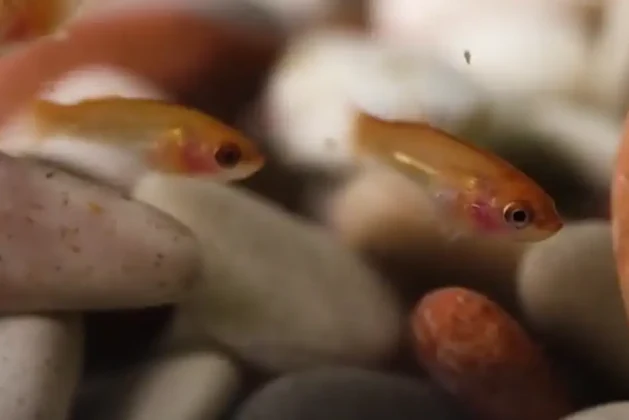
You did it – your betta fish pair successfully spawned, and now you have a batch of delicate little fry to care for.
It can be a fun experience, but the fry requires proper care.
This article will guide you on everything you need to know to raise healthy, vibrant betta fish from fry to adulthood.
Set Up the Grow-Out Tank
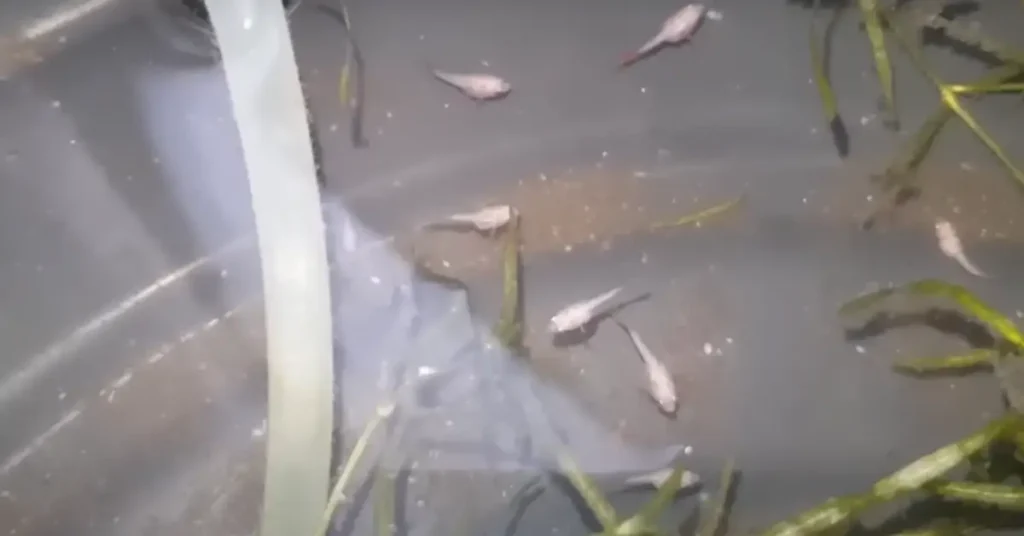
Once your pair spawns, you’ll need to set up a special tank just for raising the fry. A 10-20 gallon tank is ideal.
Make sure the tank is fully cycled before adding the fry.
Maintain the temperature between 80-82°F using a submersible heater. Betta fry need stable, warm water to thrive.
Install an air-powered sponge filter to gently circulate the water without creating too much current.
Add plenty of plants like java moss, hornwort, and anacharis which provide infusoria for newly hatched fry to feed on. Floating plants like duckweed are also great additions.
Transfer the Fry
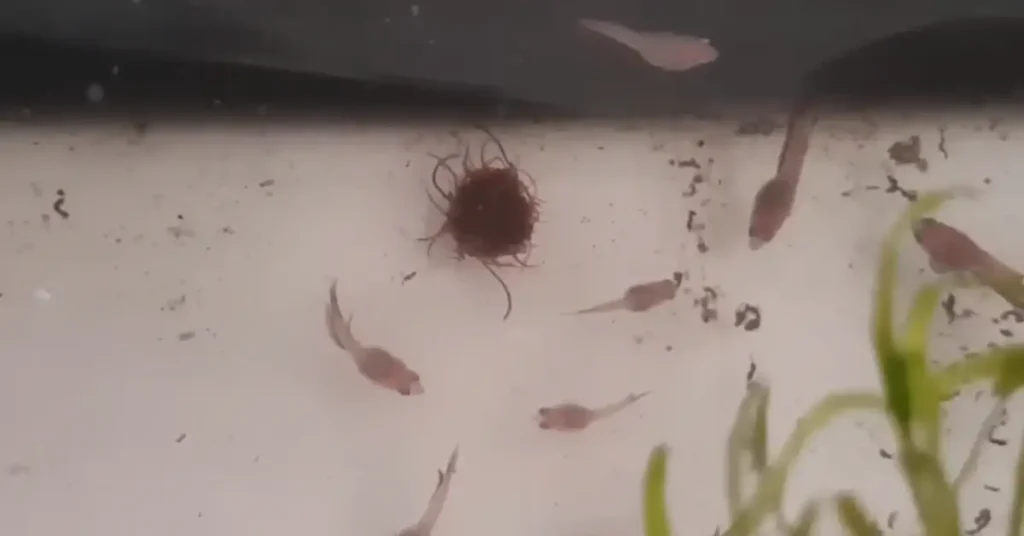
You can keep the fry in the breeding tank for the first 2-4 weeks before transferring them to the grow-out tank.
Or, move them as soon as they become free-swimming around 4 days after hatching.
Use a plastic spoon or turkey baster to gently scoop up the fry and transfer them directly into the new tank water.
Never expose the fry to air, as they can easily die from shock.
Acclimate them slowly if the water parameters differ between tanks.
Feed Appropriate Live Foods
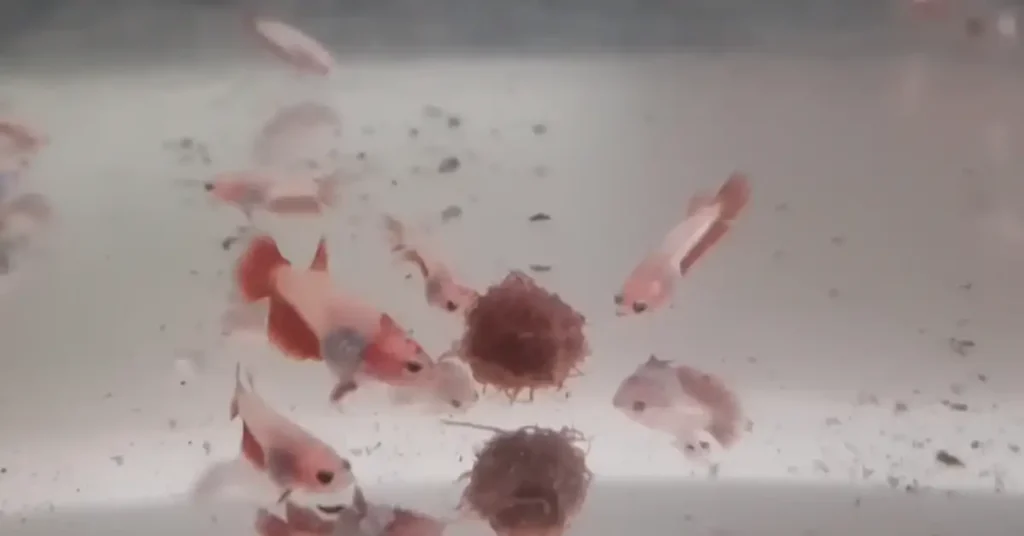
Feeding is the most crucial aspect of betta fry care. For the first 1-2 weeks, the fry eat infusoria and microorganisms in the tank.
After that, they need live foods like:
- Newly hatched brine shrimp – ideal nutrition for growth
- Microworms – for fry up to 6 weeks old
- Vinegar eels – easily cultured at home
- Daphnia – provides variety
Feed the fry small amounts 3-5 times daily. Make sure to feed live food, so it stays moving to trigger their hunting instinct.
As they grow larger, supplement with crushed-up flake foods and introduce dried foods.
Stay Diligent with Water Changes
Fry are extremely sensitive to water quality. Stick to a strict regimen of small, frequent water changes.
Replace 10-20% of the water every other day in the first few weeks. Use an airline tubing siphon so you don’t accidentally suck up any fry.
Increase water changes to 25% twice a week as the fry grow. Test ammonia, nitrite, pH, and hardness weekly and adjust as needed.
Watch for Growth and Development
It’s amazing to see the fry rapidly grow and transform.
At one week old, they are just under a 1⁄4 inch long. Their swim bladders develop around 2 weeks, and they become vertically oriented.
At 4-6 weeks, you’ll notice them darting around quickly. Coloration starts coming in around 6-8 weeks as they reach the juvenile stage.
Growth rates vary based on tank conditions and genetics. Make sure the fry appear active, healthy, and are growing steadily.
Separate Males from Females
Once they start to show coloration, you’ll be able to identify males from females.
Males will flare out their gill covers and develop longer fins. At this point, separate the males into individual containers like jars or cups. Betta males will fight with each other otherwise.
Float the jars in a heated tank to maintain temperature. Females can stay together in the grow-out tank longer term.
Continue Monitoring Water Quality
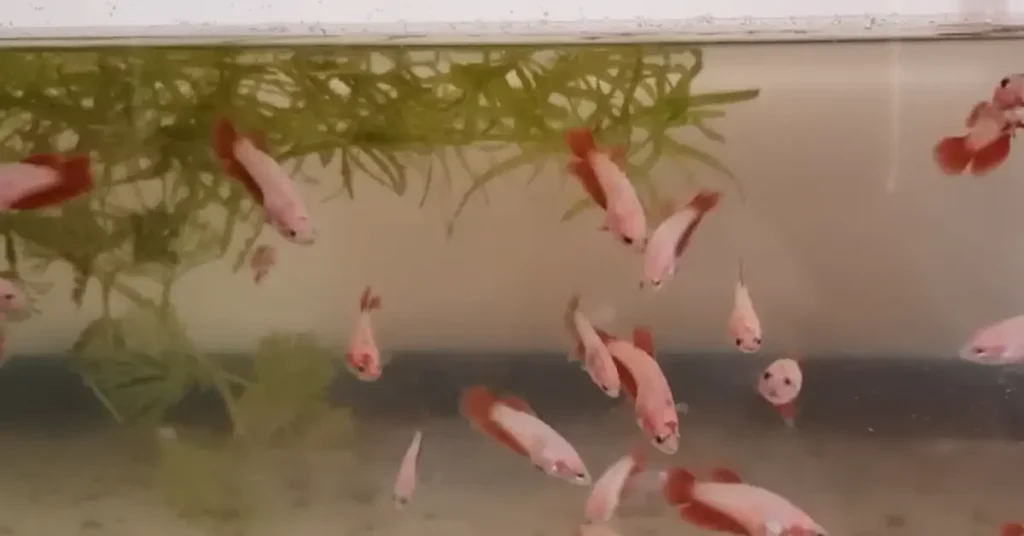
As the betta juveniles grow, the bioload increases, making continued water changes a must.
Test water parameters weekly and perform partial water changes. Target 10-20% twice a week for juveniles.
Wipe down tank walls to remove algae buildup. Ensure filtration is running optimally and water temperature is stable between 78-80°F.
Introduce More Varied Foods
At around 3 months old, betta juveniles transition to adult foods.
Start offering crushed flakes, bloodworms, mysis shrimp, and pelleted foods.
Feed them small amounts 2-3 times per day as their appetites increase.
Varying their diet ensures they get complete nutrition for growth and development.
Males in jars may need more frequent water changes as they foul the water more quickly.
Watch for Signs of Maturity
It takes 4-5 months for bettas to mature fully.
Males will develop long, flowing fins and vibrant colors. Females remain smaller with shorter fins.
Betta females may start displaying vertical barring along their sides when they are ready for breeding.
Both males and females should appear robust and display energetic swimming and feeding.
Find Homes for Your Fry
You can offer fry to local fish stores, aquarium societies, or friends and family. Or sell extras to other betta enthusiasts.
Include care instructions so the new owners understand how to care for them properly.
Some males may be show quality, so connect with International Betta Congress members to rehome exceptional fry.
Final Thoughts: Enjoy the Fruits of Your Labor
With the proper grow-out setup, live foods, regular maintenance, and monitoring, you’ll be rewarded with a spawn of healthy, energetic bettas.
Pay close attention to their growth and development milestones. React quickly if any fry seem sick or weak.
Leave a comment